Mancala Gaming & Playlogiq on the Future of iGaming Growth
Today, operators have more access to content, technology, and engagement tools than ever before. Yet access alone doesn’t create growth.
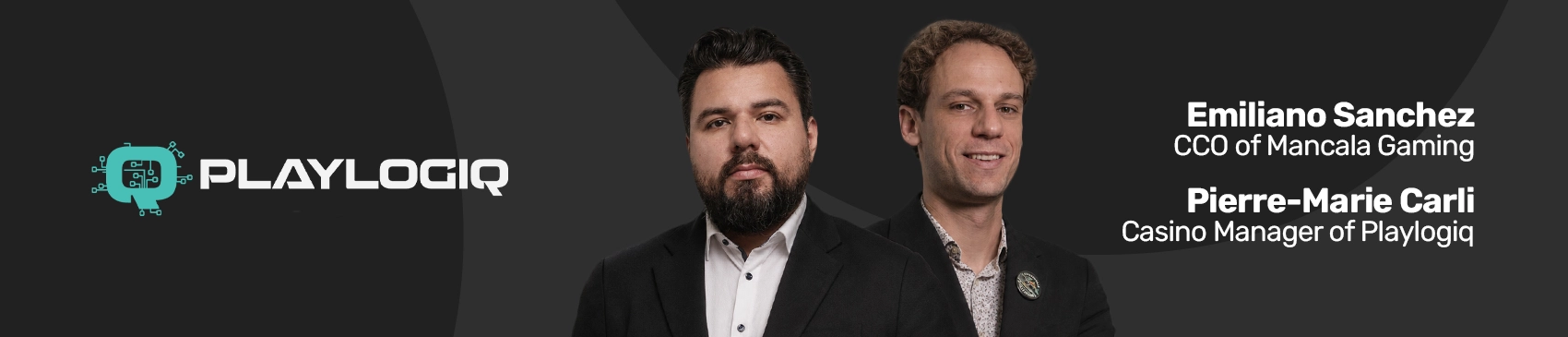
At Mancala Gaming, we see that sustainable success comes from how operators combine content, technology, and player engagement strategies. To discuss what truly drives performance in today’s iGaming market, our Chief Commercial Officer, Emiliano Sanchez, sat down with Pierre-Marie Carli, Casino Manager at PlaylogiQ, to exchange perspectives from both the game provider and platform provider sides of the industry.
What really drives growth in iGaming today: stronger content, a better platform, or the way the two work together?
Emiliano Sanchez
COO, Mancala Gaming
It’s the way the two work together, every time. Strong content without a platform that can distribute, configure, and promote it properly becomes “just another game in the lobby”. And a great platform without content that players enjoy is a beautiful shell. Real growth happens when games perform, and the platform makes it easy for operators to activate campaigns, tournaments, and trigger-based promos without friction. That’s why we’ve invested heavily in tools that operators can run directly from the back office, tied to gameplay triggers and paid automatically.
Pierre-Marie Carli
Casino Manager, PlaylogiQ
Growth doesn’t come from content or platform alone. Today, most operators have access to similar games, technology, and tools. The difference comes from how effectively they combine those assets to create a compelling player experience. The operators that grow fastest are usually those that adapt quickly, understand their audience, and turn infrastructure into engagement.
What is the biggest mistake operators make when trying to scale performance?
E. Sanchez
The biggest mistake is treating scaling as “more of everything” (more content, more promos, more spend) without the structure to turn those assets into performance. They flood the lobby and run generic campaigns, expecting volume to fix the numbers. Scaling is usually an execution and activation problem, not a content problem.
Aggressive scaling can absolutely work if the resources (budget, people, tooling) are tied to a solid, aggressive marketing strategy with clear ownership and flawless execution. It’s honestly a shame to see operators with all the right assets underperform because the plan isn’t sharp, segmentation is weak, campaigns are inconsistent, or execution breaks down. The winners scale with discipline: they segment, build a promo cadence, measure what moves retention and session time, and double down on what works.
P.M. Carli
Many operators assume that having a strong platform and a large game portfolio is enough. In reality, growth depends on execution. Retention strategies, localised campaigns, bonus mechanics, and player acquisition efforts all play a critical role. The most successful operators treat marketing and player engagement as part of their growth infrastructure.
How is AI already changing the way operators, platform providers, and content providers approach growth and decision-making?
E. Sanchez
AI is already changing decision-making in very practical ways: faster analysis, better segmentation, smarter reporting, and more reliable forecasting. Operators are using it to understand behavior patterns and optimize campaigns, while platform providers use it to automate workflows and reduce operational friction. On the content side, it's helping teams iterate faster, especially through simulations, QA support, and data modeling, so decisions are less based on “gut feel” and more on evidence.
On the support front, we’re also seeing a clear shift: faster response times and better resource allocation when teams build strong operator wiki/knowledge bases that AI can leverage to surface consistent answers quickly. That improves service quality without scaling headcount at the same rate. We’re also seeing strong use in the compliance sphere, where AI supports monitoring, pattern detection, and reducing manual workload. And from the operator perspective, one of the biggest advantages comes from automated recommendation engines that decide what to show, when to show it, and to whom, based on real behavior, and not to forget on the segmentation, churn detection, and even triggering automatic bonuses at the right moment.
That said, I remain cautious. Human monitoring is still non-negotiable, not only for security concerns, but because occasional hallucinations and inconsistencies still happen. AI is a powerful accelerator, but it shouldn’t be treated as autopilot. The companies that will win are those that adopt AI with governance, clear ownership, and a very practical understanding of where it adds value, and where human judgment must remain in control.
P.M. Carli
AI is certainly helping operators work more efficiently, but I don’t think it’s the key factor behind success.
The operators that consistently perform well are those that understand their audience, identify the right opportunities, and execute effectively. AI can support decision-making, but strong content, a reliable platform, and a clear strategy will always make the biggest difference.
What makes content perform once it is live, beyond simply being available on a platform?
E. Sanchez
Two things: activation and replayability. A good game can still fail if nobody pushes it correctly. Content performs when it’s supported by the right promo layer: tournaments, trigger-based bonuses, free spins campaigns, and activated at the right time for the right audience. On the replayability side, you need a strong loop: clear gameplay, satisfying pacing, and features that create “one more spin” moments. That’s why we focus on mechanics that add excitement without making the experience complex, and tools that operators can deploy immediately.
P.M. Carli
Availability is only the starting point.
Casino content performs when it’s actively supported through promotions, featured placements, bonus campaigns, and data-driven decision-making. Segmentation plays an important role too. Some players consistently return to the same games, while others actively look for variety. Understanding those behaviours helps operators promote the right content to the right audience, improving both engagement and player retention.
From your respective perspectives, what innovations or developments are Mancala Gaming and Playlogiq currently working on to help operators stay ahead as the market evolves?
E. Sanchez
From Mancala’s side, we’re doubling down on what we do best: strong slot releases backed by a serious layer of gamification and bonus tools that operators can activate without heavy lifting. The goal is simple: make the content perform not only because it looks good, but because operators can truly work it through triggers, tournaments, jackpots, and network-style promotions that keep the experience fresh.
This is exactly why our partnership with Playlogiq matters right now: we’ve just finished implementing our gamification layer on the Playlogiq platform, immediately giving operators more options to activate campaigns, structure bonuses intelligently, and build retention-driven experiences without extra complexity.
Conclusion
While content, technology, and AI continue to evolve, one thing remains clear: sustainable growth in iGaming comes from execution. Operators that successfully combine strong content, effective engagement tools, and a clear player strategy are the ones most likely to stand out in an increasingly competitive market. For both Mancala Gaming and PlaylogiQ, the focus remains the same, helping operators turn access to great products into measurable player engagement and long-term growth.